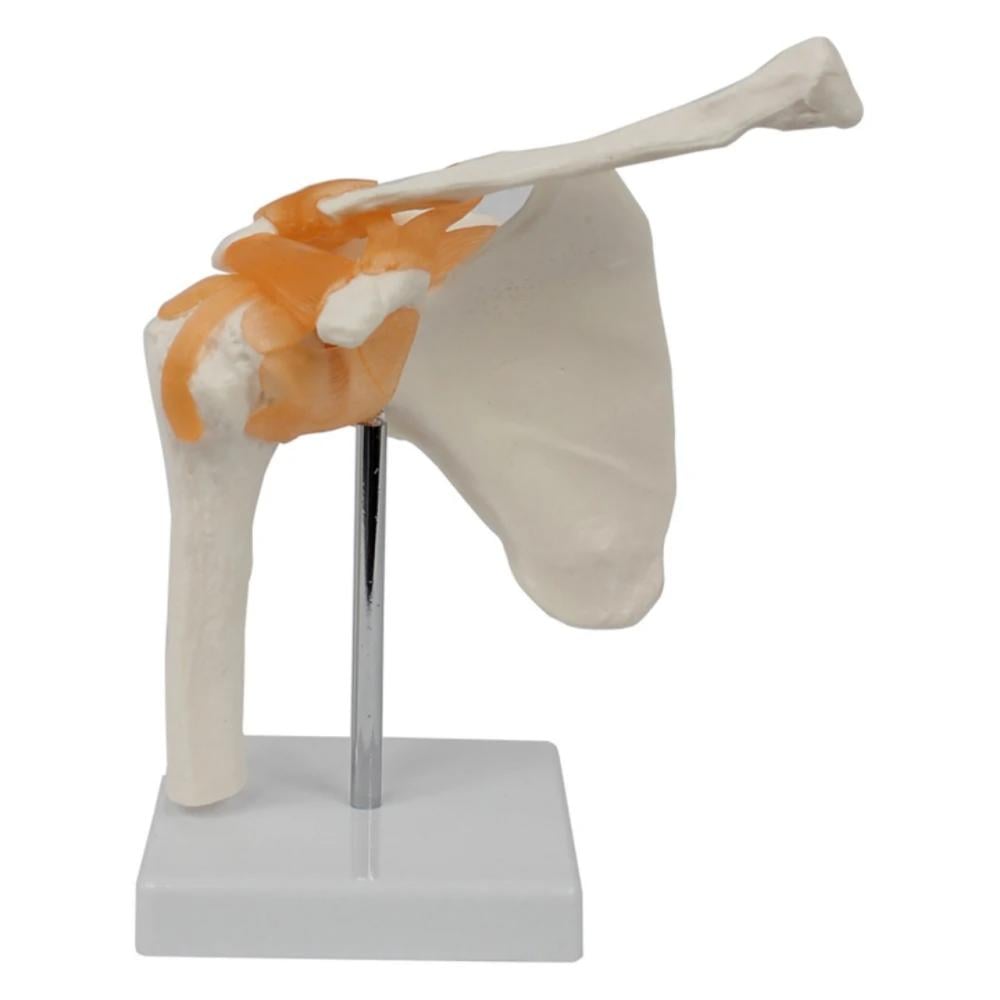
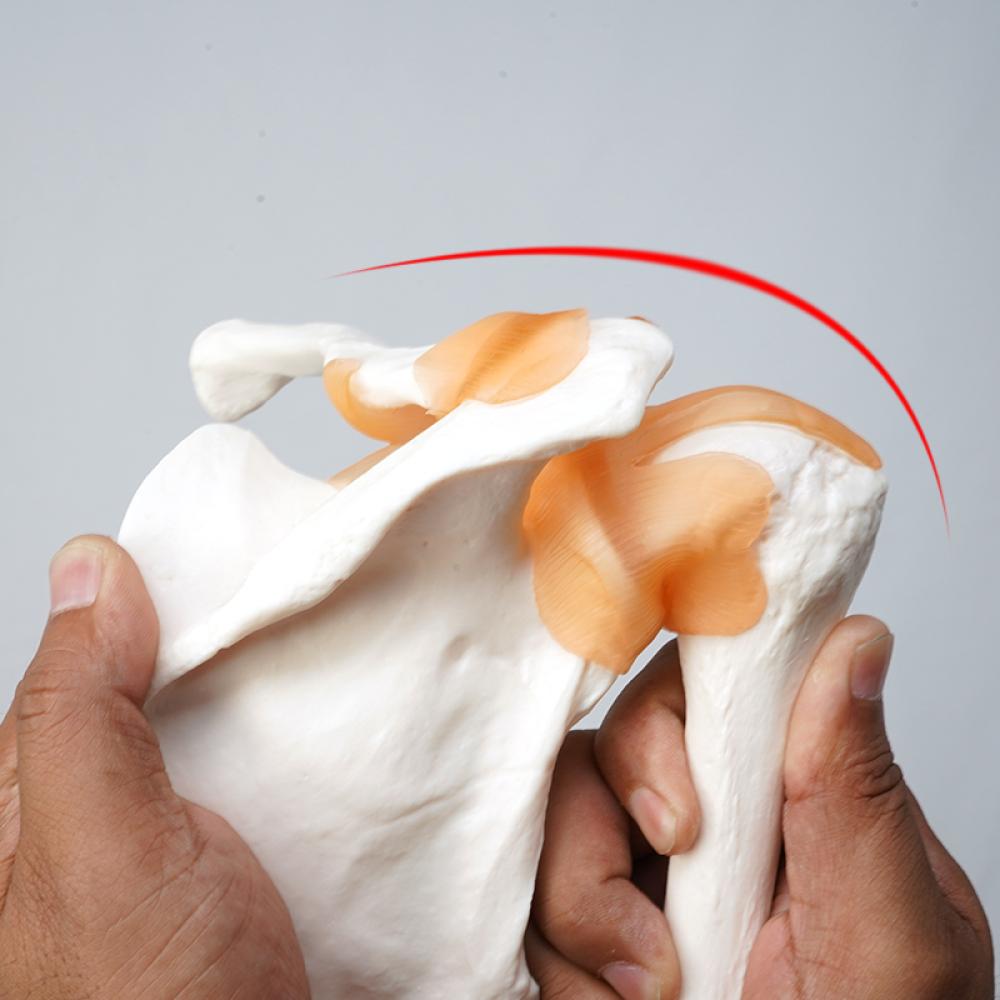
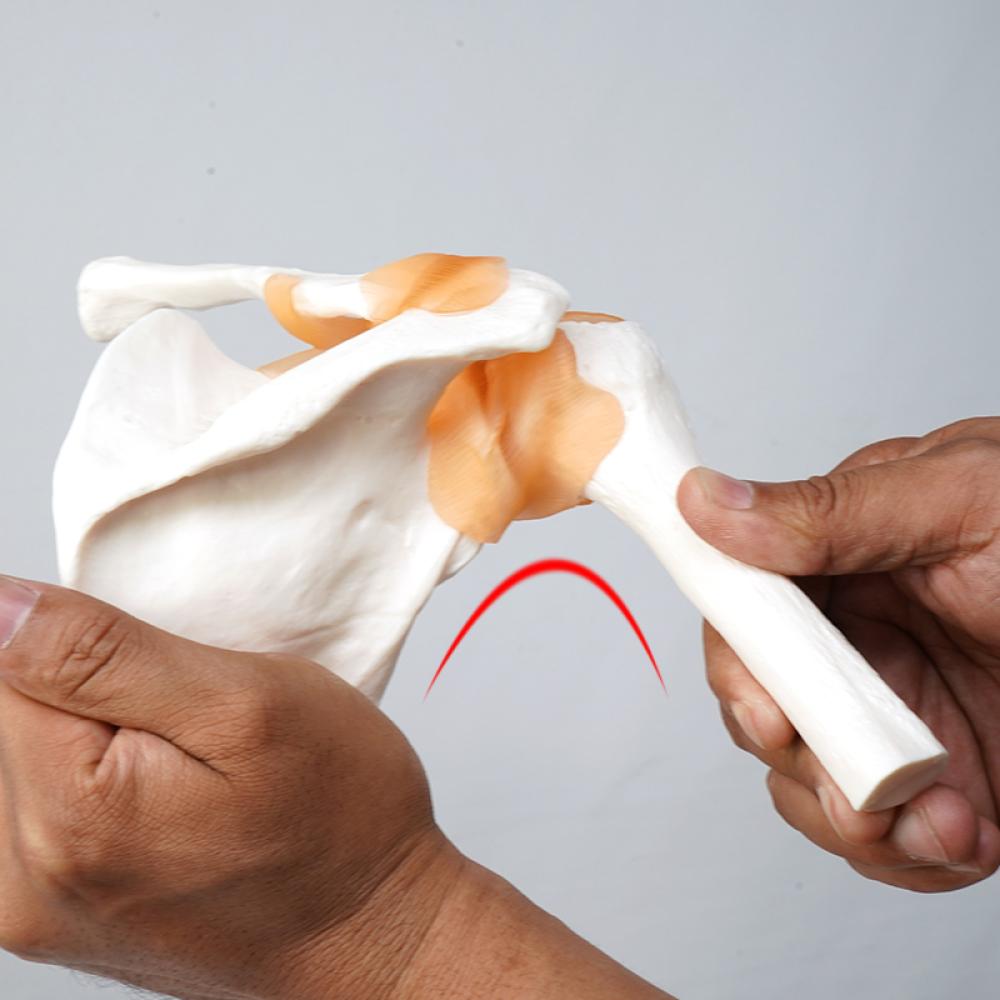
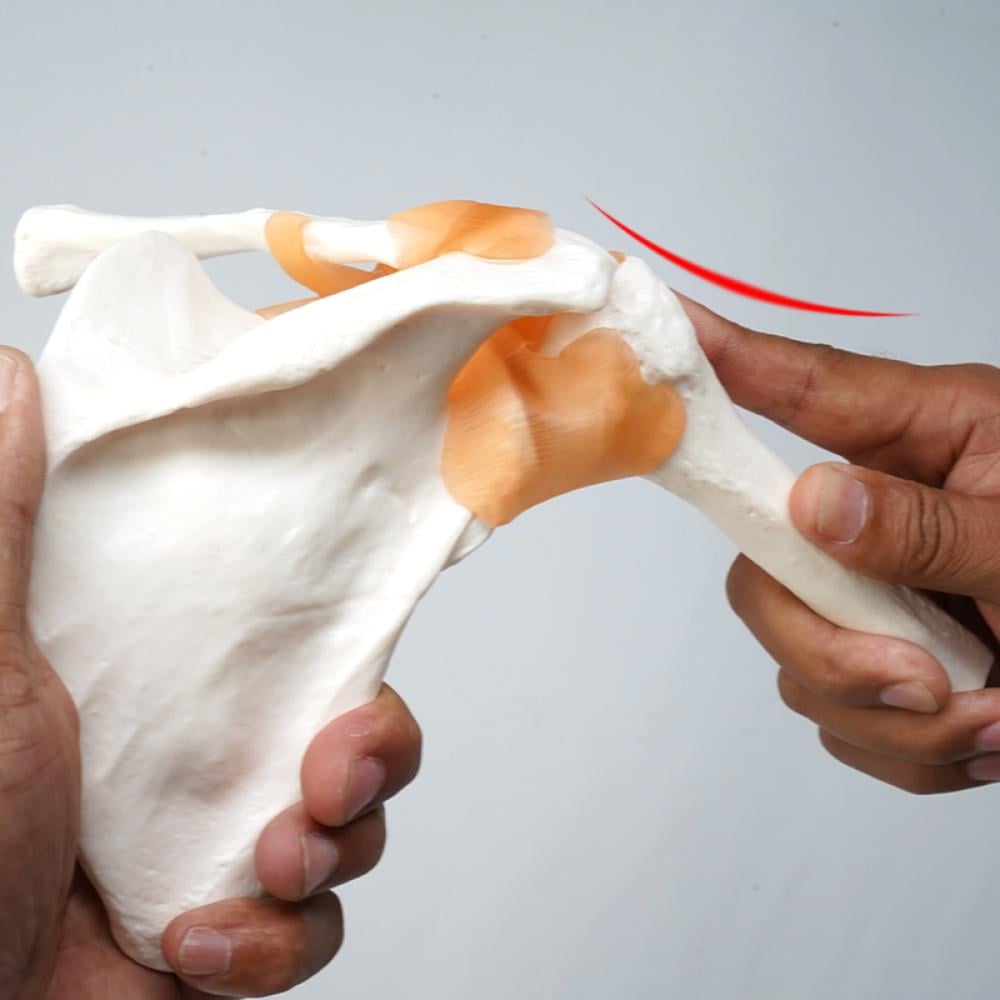
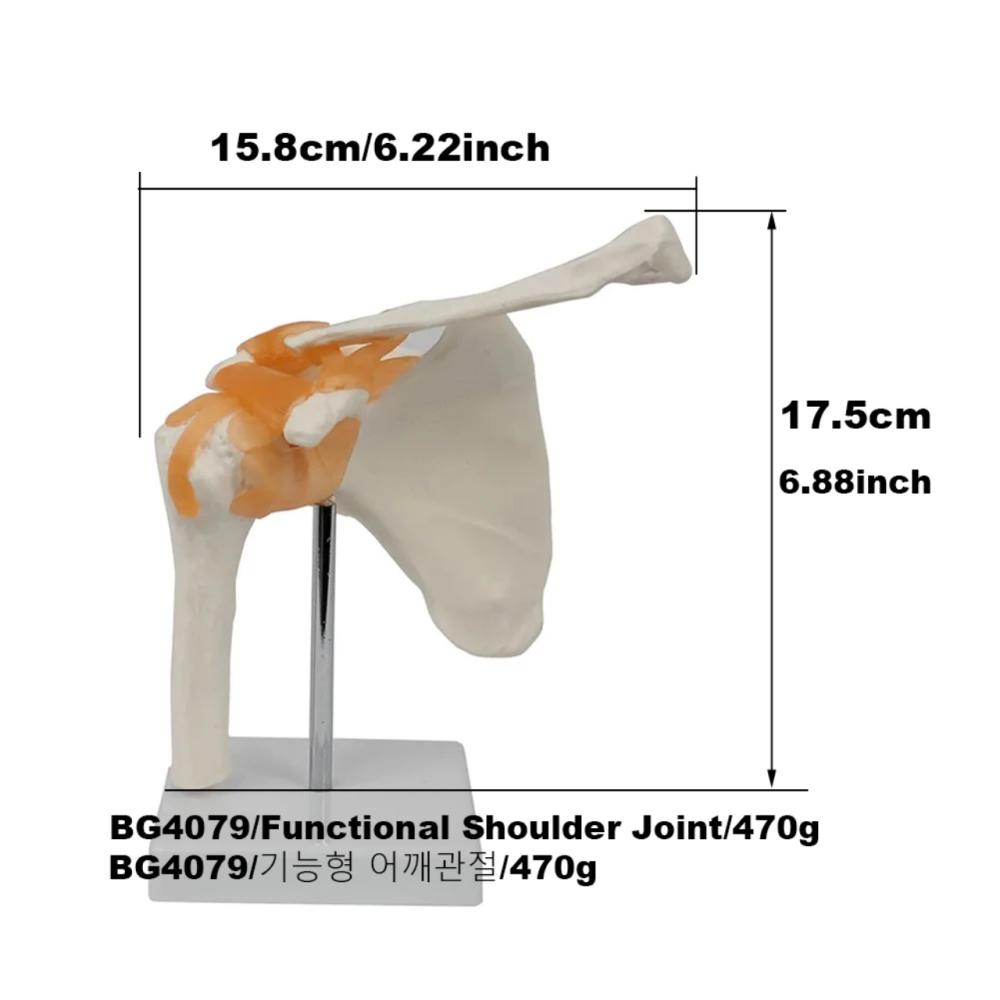
Realism and accurate anatomy in the model of the shoulder joint :
💡 Comprehensive anatomical details in a model of the shoulder joint :
The shoulder joint model is the most comprehensive educational tool for understanding the complex structure of the human shoulder joint, vividly illustrating the interaction between the humerus, scapula, and clavicle. Featuring flexible, color-coded ligaments that demonstrate the joint 's attachment points and kinetic support, this model is an exceptional addition to the Good Doctor store for medical students seeking to understand dislocations and ligament tears in a tangible, visual way.
🏛️ Quality and professionalism in the shoulder joint model :
The shoulder joint model is constructed using environmentally friendly medical-grade PVC, ensuring exceptional durability and a long lifespan in clinics or teaching laboratories. Its compact size (7 x 6 x 8 inches) makes it highly portable and easy to display on a desk, making it an ideal visual aid for orthopedic and spine surgeons when explaining medical conditions to patients. The shoulder joint model simplifies complex theoretical explanations by providing a realistic and interactive representation.
📊 4. Technical specifications of the shoulder joint model :
- Scale drawing: The shoulder joint model has a realistic size that accurately mimics the skeletal structure of an adult.
- Dimensions: The shoulder joint model comes in compact sizes, ideal for studying ( 7 x 6 x 8 inches ).
- Materials used: The shoulder joint model is made of durable and environmentally friendly PVC plastic to ensure user safety.
- Parts shown: The model of the shoulder joint highlights details of the (clavicle, scapula, head of the humerus, and colored articular ligaments).
- Base: The shoulder joint model includes a stable and elegant display base for easy inspection from all angles.
- Uses: Ideal for medical schools, orthopedic medicine specialties, physical therapy centers, and general medical education.
❓ 5. Frequently asked questions about the shoulder joint model :
- Q: Does the model of the shoulder joint show the basic ligaments such as the coracohumeral ligament?
- A: Yes, the shoulder joint model features an accurate representation of the main ligaments surrounding the joint, which are colored in a different way to make them easier to distinguish from the bones during study.
- Q: Can the parts of the shoulder joint model be moved to simulate a dislocation?
- A: The shoulder joint model is designed to be a stationary study model that focuses on correct anatomical relationships and ligament positions, and is ideal for understanding the structure of a stable joint.
- Q: Can the PVC material in the shoulder joint model withstand repeated use?
- A: Absolutely, the PVC material in the shoulder joint model is very strong and break-resistant, making it very suitable for medical students who need to touch and examine the model constantly.